

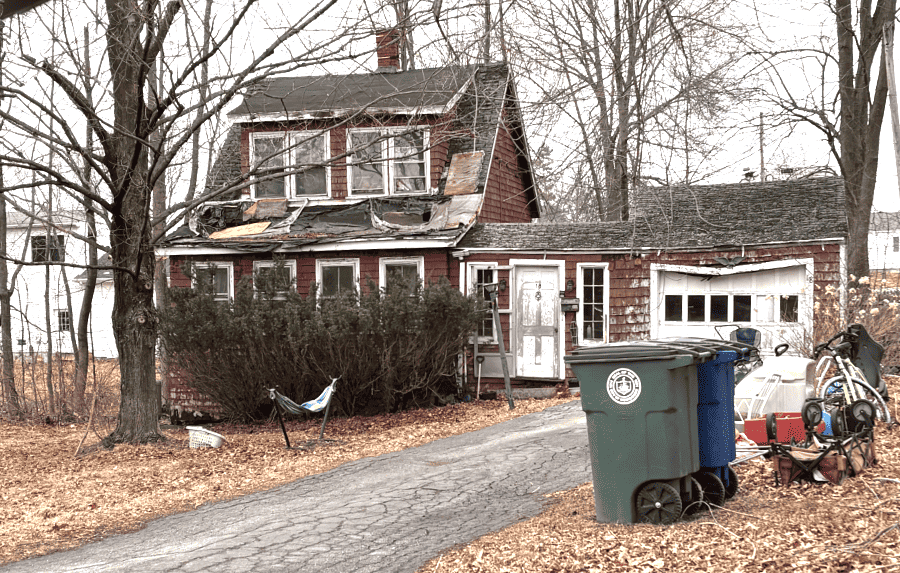
Westbrook sits along the Presumpscot River just west of Portland, and a lot of its housing stock dates back to the mill era, which means older wiring, older heating systems, and homes that have often been in the same family for decades.
When one of those houses passes to you after a parent or relative dies, the grief usually isn’t the only weight you’re carrying. Within weeks, you’re also responsible for a property you never planned to own, and the costs attached to it rarely show up on any list anyone hands you at the funeral. If you’ve got siblings or other heirs involved, add in the time it takes everyone to agree on what to do next, and the costs below can pile up for months before anyone makes a decision. Here’s what actually shows up on the bill, and what you can do about it.
You Inherit All The Taxes Also
The day the property title moves into your name, or into the estate’s name while probate is still open, the tax bill becomes your problem too. Maine sets property tax rates at the municipal level, so what you owe in Westbrook can look very different from what a cousin owes on a similar house forty minutes away in Cumberland Center. You can look up current rates and exemptions directly through Maine Revenue Services’ property tax division.
If the estate doesn’t have enough cash sitting around, back taxes, liens, or any outstanding mortgages often get paid out of the estate before anything reaches the heirs, which can shrink what’s actually left for you.

Most people also brace for a big capital gains hit and are relieved to learn that isn’t usually how it works. The IRS resets what’s called the cost basis of an inherited home to its value on the date the previous owner died, so you’re generally only taxed on whatever appreciation happens after that point, not decades of gains the original owner built up.
You can read the IRS’s own explanation of how inherited property is taxed if you want the details straight from the source. None of that erases the tax bill entirely, but it usually means the number is smaller than people fear.
Most heirs catch a break here: the IRS resets what’s called the “cost basis”
However, most heirs catch a break here: the IRS resets what’s called the “cost basis” of the home to its value on the date of death, so you’re generally only taxed on appreciation that happens after you inherit it, not decades of gains the original owner built up. That said, if the estate has to pay off a mortgage, back taxes, or liens before the title clears, those bills come out of the estate’s pocket first, which can shrink what’s left for the heirs. However it shakes out, plan on owing something in taxes as the new owner, so it doesn’t catch you off guard.
The utility and insurance bills don’t stop just because no one’s living there

An empty house still needs power and water, and in a Maine winter, the heat has to stay on no matter what, or you risk a frozen pipe bursting and flooding the place while nobody’s around to notice.
That single scenario is common enough that the Insurance Information Institute has written about how vacancy clauses affect home insurance coverage, including cases where a burst pipe in an unoccupied inherited home caused tens of thousands of dollars in damage that the standard policy wouldn’t touch. Most homeowners insurance limits or drops certain coverage once a house sits vacant for 30 to 60 days, and a lot of families don’t find that out until they file a claim.
On top of that, insurers tend to charge more to cover a vacant property in the first place, since nobody’s there to catch a leak, a break-in, or a fire before it spreads. Paying full utility and insurance costs on a house that’s producing nothing for you, month after month, is usually the point where people in Westbrook start seriously looking at how fast they can get out from under it.
Maintenance doesn’t pause for probate
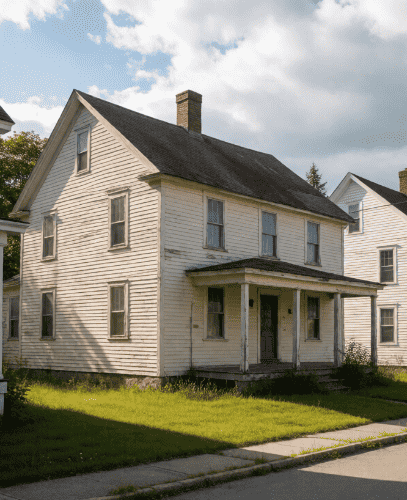
A house doesn’t take care of itself just because its owner is gone. We’re the Pine Tree State for a reason, and a surprising number of the vacant houses we walk through have soffit damage or an actual leak inside because nobody cleared pine needles out of the gutters for a season or two. That kind of thing is cheap to prevent and expensive to fix once water gets behind the siding.
Then there’s the deeper question of what’s actually wrong with the house. Older Westbrook homes often come with knob-and-tube wiring, an aging oil tank, or a roof that’s overdue for an update. Any of these problems can turn into a real money hog if the house needs to meet code for a traditional sale on the MLS. Add in the personal belongings still inside, the furniture, the decades of stuff in the attic and basement, and cleaning the place out becomes its own project, one that’s a lot harder to manage from another state than from twenty minutes away.
The cost nobody warns you about: liability on an empty house
Here’s the one most people don’t see coming. You’re still on the hook if someone gets hurt on the property, even if nobody’s living there. A neighbor’s kid wanders in, a contractor trips on a broken step, and the same Insurance Information Institute research on vacant properties notes that a standard homeowners policy can deny that claim once the house is classified as vacant, leaving you personally exposed to a lawsuit and legal costs that can run into six figures.
It’s not something anyone brings up when you inherit a house, and it’s exactly the kind of thing worth asking your insurance company about directly before the house sits empty for another month.
What if the heirs don’t agree yet?
If you’ve got siblings who haven’t landed on the same page, you’re not stuck. We’ve worked with multiple-heir situations plenty of times, including cases where we provided short-term financing so one heir could buy out a sibling who wasn’t ready to sell before the sale moved forward. It takes patience and clear communication with everyone involved, but a disagreement between heirs doesn’t have to mean the property just sits there for another year while the costs above keep adding up.
Sell Your House to Avoid These Costs
If you go the traditional route and sell through an agent, you’ll also be covering agent commissions, closing costs, and any repairs needed to get the house market-ready. Those expenses add up fast, so it’s worth knowing the real number before you commit. A direct sale to We Buy Houses In Maine skips all of that.
How We Buy Houses In Maine Can Help
If you’ve inherited a house in Westbrook and you’re staring down some combination of these costs, you don’t have to figure it out alone. We Buy Houses In Maine is a small, family-run business based in Scarborough, accredited by the Better Business Bureau, and we’ve sat across from a lot of families in exactly this spot.
Here’s how we get to a dollar amount on our offer
We look at what the house would be worth fully renovated, subtract what that renovation would cost us to do, and what’s left is what we can offer you.
And don’t worry – this is truly a no-obligation, no-pressure situation.
We’ll walk you through that math for your specific property, not just hand you a figure and hope you take it. Once you accept, we can usually close in a couple of weeks if you want it done fast, or later if you need more time, since you’re the one who picks the date.
A direct sale also skips the agent commission, the closing costs, and the repairs entirely, and you don’t have to clean the place out first if you’d rather not. If listing with a realtor turns out to be the better fit for your numbers, Bankrate’s breakdown of typical seller costs is a fair place to start comparing.
You honestly need to be prepared and realistic when you add up the costs of an inherited property. Inheriting a property in Westbrook will definitely come with more costs than you expect.
Call Us to Learn More
If you’ve inherited a house you didn’t think was going to be part of your life, We Buy Houses In Maine is here to make the process simple, as a local buyer who knows the Westbrook area and pays cash for houses as-is.